
VIRGINIA BEACH, VA – Chad Gangwer, a fourth grade teacher at this school serving 400 fourth and fifth grade students, has developed a faculty book discussion group with a small group of colleagues. Currently, the group is reading the book in segments, responding to a series of discussion questions, and talking about learning theory, the type of feedback teachers give students, and the best ways to introduce activities and interest students. Through an on-line discussion board, Gangwer hopes to continue to expand the book discussion group to eventually include all of the school faculty and potentially develop a school wide thematic program.
Winning in New Ways
By SHELBY HOYT
It has been about 6 months since I have completed reading The Art of Learning. Josh’s story really got me thinking because his story is very similar to mine. My journey started off as an elementary school student with some big shoes to fill. I come from a family of athletes, swimmers to be exact. My grandfather competed in backstroke events at VMI, my parents met on the swim team at the University of Georgia, and my mother competed for Canada at the 1984 Olympics in Los Angeles. To make a long story short, I was born with the swimming gene.
However, the idea of competitiveness was something that I had to learn. When I first started swimming, I participated because I loved being in the water and goofing around with my friends. My parents have always believed in nurturing my love for the water, so we spent every summer up in Canada visiting relatives. My coaches always thought my parents were crazy because they never made me train while we were away. Those summers were the best gifts that my parents could have ever given me.
As I grew older, my parents understood that it was time to shorten our visits and become more focused on swimming, only at my request. Throughout high school, I became extremely dedicated to the sport and found success in my hard work. I became the Georgia State Champion in the 500 yard Freestyle and achieved All-American status. Later that year, I signed to compete at NC State in the distance freestyle events. I graduated from high school at the top of my swimming game and excited to compete at a NCAA division I level.
When I first got to school the training and schoolwork became much more difficult. I started training twice a day and started lifting weights, something that I had not done in high school. I also had to adapt to being coached by new people and getting to know my new teammates. With all of the added stress, my body had a difficult time keeping up. A few months into school, I caught pneumonia and had to take a few weeks off. I eased back into swimming around December and I knew that I was behind with the training. In order to get back into peak shape, I began training harder than ever, but my body still couldn’t keep up. One month later, I was in the emergency room with a severe respiratory infection. With the rest of my freshman season in the bucket, I was not off to a good start and my confidence knew it.
Going into my sophomore year, things did not get better. My body continued to succumb to respiratory problems and my coaches started to become frustrated. I, however, became my harshest critic. I couldn’t understand how I had gone from State Champion to not even being able to make the travel team. My confidence was at all all-time low and I began to hate swimming. It wasn’t fun anymore. It’s a crazy feeling, losing something that has always been your passion.
At the end of my sophomore season, I knew that it was time for me to retire from the sport. I was no longer excited about competing and I didn’t enjoy practice anymore. With my new-found freedom, I was excited to enjoy my last two years of college. I changed my major from Animal Science to Education and I was excited to explore my new life. At the beginning of my junior year I started to have different problems. I would show up to the gym to workout and would never enjoy myself. I hated being there because it reminded me of my swimming life. I didn’t feel good about myself because I was no longer in “good shape” and I was afraid of reaching hard levels because I didn’t want to get sick again. Exercise always reminded me of pain and I began to stay away from it all together.
At the end of my junior year, my professor handed my class The Art of Learning to read over the summer. She told us to read the book and just shoot her a quick email when we finished. As I was reading, I began to really relate to Josh’s story. He had managed to put all of my feelings into writing. He had chosen to leave something that had great meaning to him. Not only that but he had learned how to ignite passion into something new, how to make things exciting. After finishing the book in three days, I began a summer-long experiment: I was going to figure out how to like exercising again.
What I learned from Josh and my earlier days of swimming was that I needed to start slowly. I didn’t want to just throw myself into something because the overwhelming feeling would not be helpful. So I decided to take hour-long walks in the afternoons. No running, no intervals, no time standards; just walking. I would sometimes go by myself or with a few friends and I would just enjoy being outside. I did this for a few weeks and began to feel great because I was being healthier and it wasn’t too difficult. This was when I decided that I would make things more challenging, but not by too much. So I set a goal of being able to run one mile without stopping. I found that the challenge was difficult at the time but it began to get easier and easier. I was beginning to have fun with exercise again!
With the summer coming to an end, I was pleased with my results. I was able to run four miles without stopping and I began to practice yoga for stress-relief. However, when school began again things started to get harder. I wasn’t able to keep up with my strict summer regiment, but I never let things fall into shambles. The fall was a learning experience. I was doing well in the classroom and I still found time for exercise. I can honestly say that I did not train at NCAA division I level, but I did enough to satisfy myself and that is what I am excited to build upon. This past Thanksgiving I ran my first-ever four mile Turkey Trot and I finished with my chin held high. It was, and still is, a difficult journey that I am handling to this day.
The next question is, how does this enhance my teaching abilities? Although “teaching” is the name of my profession, “learning” and “understanding” are what the profession is all about. My experience with The Art of Learning has taught me that the concept of “learning” and “education” is an on-going journey. There will be good days and there will be bad days. What will you make of them? Learning to find comfort in exercise was something that has plagued me for a long time because of how overwhelmed I felt. When I was able to break it apart and take my time, I realized that I was able to really enjoy the activity and the whole experience. This approach is central to my educational philosophy now. Currently, I am a middle grades student teacher in an American Social Studies classroom. Instead of throwing big concepts at my students, I plan on starting small. When I am teaching I want them to find an aspect of history that they relate to so that they start to become more immersed on their own. When we start to hit on the larger topics and ideas, they will have a point of reference if they become confused or overwhelmed
All in all, I can say that this has been the most difficult piece that I have had to write in my four years of college because this story has made me who I am today. The Art of Learning is a book that will always be in the back of my mind when I am trying to understand and grow with my middle school students. By starting small and building upon new interests, my goal is to make my students into life-long learners.
Jack Schore Tennis
Viewtown, VA – Jack Schore, is the Founder and Director of Jack Schore Tennis – a program that serves 700-800 young tennis players per week in the Washington DC area, ranging in age from 4-18 years old. Coach Schore approached the JW Foundation with an interest in integrating the Art of Learning principles into his coaching in order to build awareness in his athletes and help them develop a feeling of “being in the present.” He explains, “Tennis won’t be the end all be all for most of these players. In the micro, The Art of Learning principles will help their game, but I want them to use what they learn to enhance their lives in the bigger picture.”
He will work with his most competitive players on the concepts of Beginner’s Mind and developing a growth mindset, Investment in Loss, the Power of Presence, and the Downward Spiral. He will include meditative breath work, stress and recovery interval training, and kinesthetically introspective self-evaluation into each practice in order to help his athletes develop the skills of calming the mind and being in the present as well as learning to trust their “inner voice” to improve their game. He then hopes to coordinate a program with four sports facilities and the 40 coaches he has working with his beginning and intermediate players, that will focus on building resilience through the principles of Valuing Process Before Results, Investment in Loss, Beginner’s Mind, Using Adversity, and the Internal Solution.
Cascade Volleyball Club
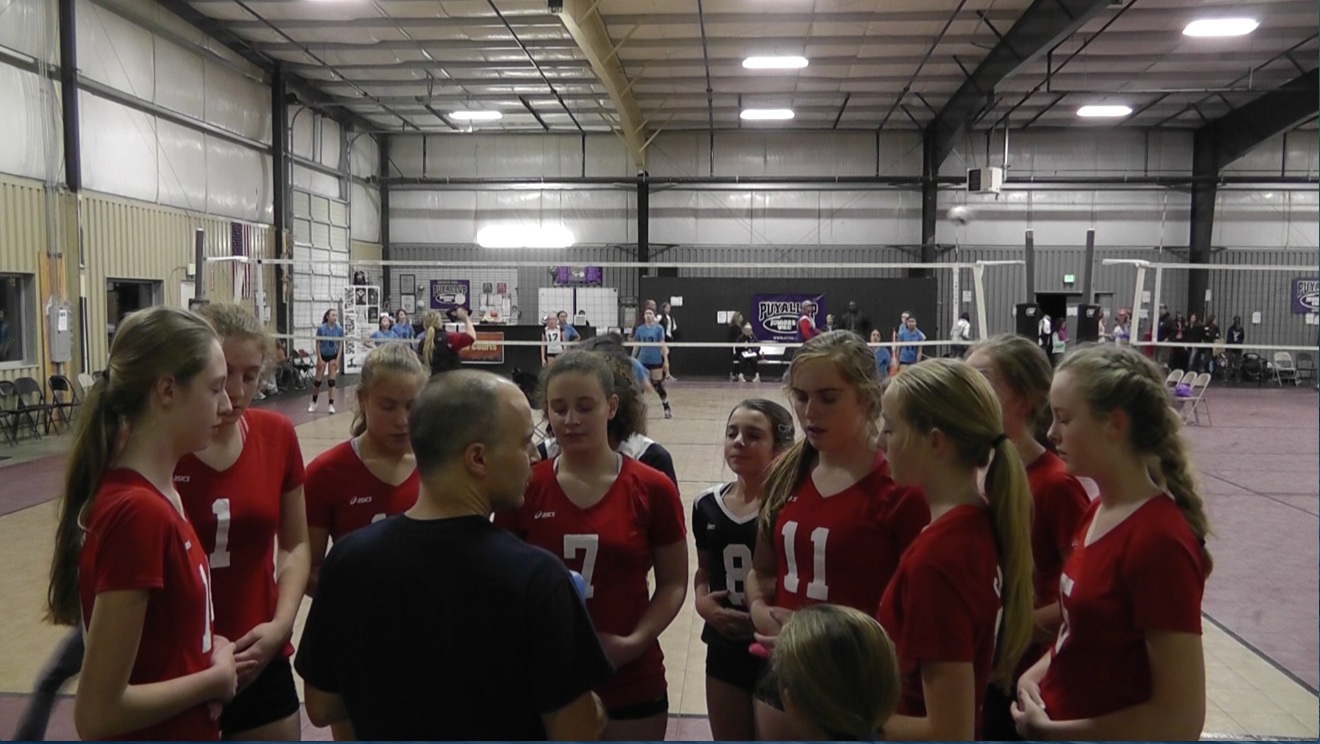
SEATTLE, WA – Cascade Volleyball is a member of USAVolleyball, a Gold Medal Squared Certified Club, and has earned the Seal of Commitment from the Positive Coaching Alliance. Dan Urrutia is a U14 coach with the club and works with athletes with a range of experience and skill levels. He is committed to creating a positive athletic environment for his athletes and has a history of helping his players develop resilience with a strong focus on Investing in Loss and Valuing Process Before Results.
Coach Urrutia explains that he became interested in developing a program with the JW Foundation because “The Art of Learning and the guides provide the best catalog of the different mental and emotional elements of learning that I’ve ever seen.” Though many of the learning principles are of interest to him, he will focus on the Power of Presence and the Downward Spiral with his current athletes. He is beginning by incorporating a regular meditative breath work routine into each practice in order to help his players develop the skill of calming the mind and focusing on the present moment. Through this breath work, as well as visualization, stress and recovery interval training, and kinesthetic introspection the athletes will begin to develop the skills of maintaining focus in challenging situations, identifying when the quality of their presence is beginning to slip and returning to presence in order to maintain the quality of their performance.
ACE Charter Middle School
San Jose, CA – Adisa Banjoko, founder of the Hip Hop Chess Federation, is bringing the HHCF methodology to this charter middle school in the California Bay Area. Through his position as a chess instructor and physical education teacher, Banjoko plans to teach his students skills and strategies that will not only help them play chess and succeed academically, but to make positive choices in their lives in general. “Teaching chess to kids after age 16 is intervention for a lot of violence,” Banjoko explains. “Chess for kids before or by 13 is prevention. If you get them to understand even these basic ideas, that they have to make sacrifices, weigh risks, and strategize, they’re ahead of the game and start to think about not getting involved with things dealing with gangs and drugs”
After an initial immersion in the process of how the game of chess works, Banjoko will begin to introduce The Art of Learning principles to his students. Through concepts such as Investment in Loss, Using Adversity, and Numbers to Leave Numbers, the students will begin to develop a more resilient and growth oriented relationship to learning and facing challenges. In addition, Banjoko will incorporate these same principles into his physical education instruction so that his students have the opportunity to experience both the physical and intellectual applications of the concepts.
Redmond Proficiency Academy
Redmond, OR – Redmond Proficiency Academy is a charter school serving students in the 6th through 12th grades. Their mission is to provide students with a proficiency-based education in a personalized learning environment through the creation of learning opportunities that are aligned to state, national, and industry standards. They value the individuality of their students and strive to create an inclusive school environment in which all students aspire to high levels of academic achievement and personal growth.
Sandy Cloud, the school’s Community Liaison, organized a group of faculty who read and discussed The Art of Learning. The result was a podcast on the school’s “Three Minds, One Book” series, hosted by Executive Director John Bullock, and including Science instructor Amy Mitchell and Spanish instructor Troy Longstroth. Over the course of their conversation they touched on ideas such as the importance of Investment in Loss in science and language learning, Using Adversity, Building Your Trigger, and Loving the Game. They shared ideas about how to include a depth over breadth approach to teaching in an educational system in which there must be a breadth of study, and how to encourage students to discover and follow their passions, even when it is difficult to do so.
RPA is using their Yoga classes, Band classes, and Freshman Seminar classes to teach the Power of Presence through various forms – gratitude, silence, meditation, slowing down – in order to create space for students to hear their inner voice and allow time to slow. These practices will give students a chance to see more clearly, know the choices available to them, and handle stress in healthier ways.